
Your organization sees firsthand what older adults need to thrive. This webinar will introduce NCOA’s Age-Positive Advocacy Toolkit and show how community-based organizations can use storytelling, relationship-building, and other practical tools to elevate their voice, share local insights, and help inform decisions that affect older adults. The toolkit provides messaging tips, sample social media language, and graphics, and more.
You can access the full Age-Positive Advocacy Toolkit on our website.
-
Age-Positive Advocacy Toolkit Webinar
1 hour
Learn how to use stories, relationships, and practical advocacy strategies to elevate your organization's voice and impact.
-
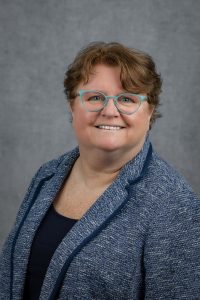
Dianne Stone
Associate Director, Community Partnerships and Network Activation, National Council on Aging
Dianne Stone has more than 20 years of experience with senior centers and aging issues, primarily as the Director of the Newington Senior and Disabled Center in Newington, Connecticut. Stone has also worked, volunteered, and held leadership positions with a variety of organizations in Connecticut, including Connecticut AgeWell Collaborative, the ADA Coalition of Connecticut, Connecticut Medicaid Oversight Council, and the Commission on Women, Children, Seniors, Equity and Opportunity. She joined NCOA in January 2022 where she is focused on building capacity and engagement within the community-based organization network with special emphasis on senior centers.
-
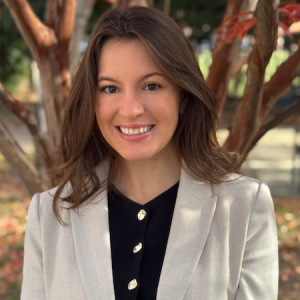
Sophie Morgado
Legislative & Policy Associate, National Council on Aging
Sophie Morgado serves as the Legislative & Policy Associate at the National Council on Aging. In this capacity, she advocates for older Americans at the federal policy level, focusing on critical issues such as the Older Americans Act, Medicare, and mental health, as well as other healthcare and retirement issues. She also supports NCOA’s broader advocacy and government relations efforts, including Hill Day planning and execution, helping to ensure older adults’ priorities are elevated with federal lawmakers.
Sophie holds a Master of Public Health (MPH) degree, with a health policy focus, from The George Washington University Milken Institute School of Public Health. She also received her B.S. in Public Health with a minor in Political Science from West Virginia University.